
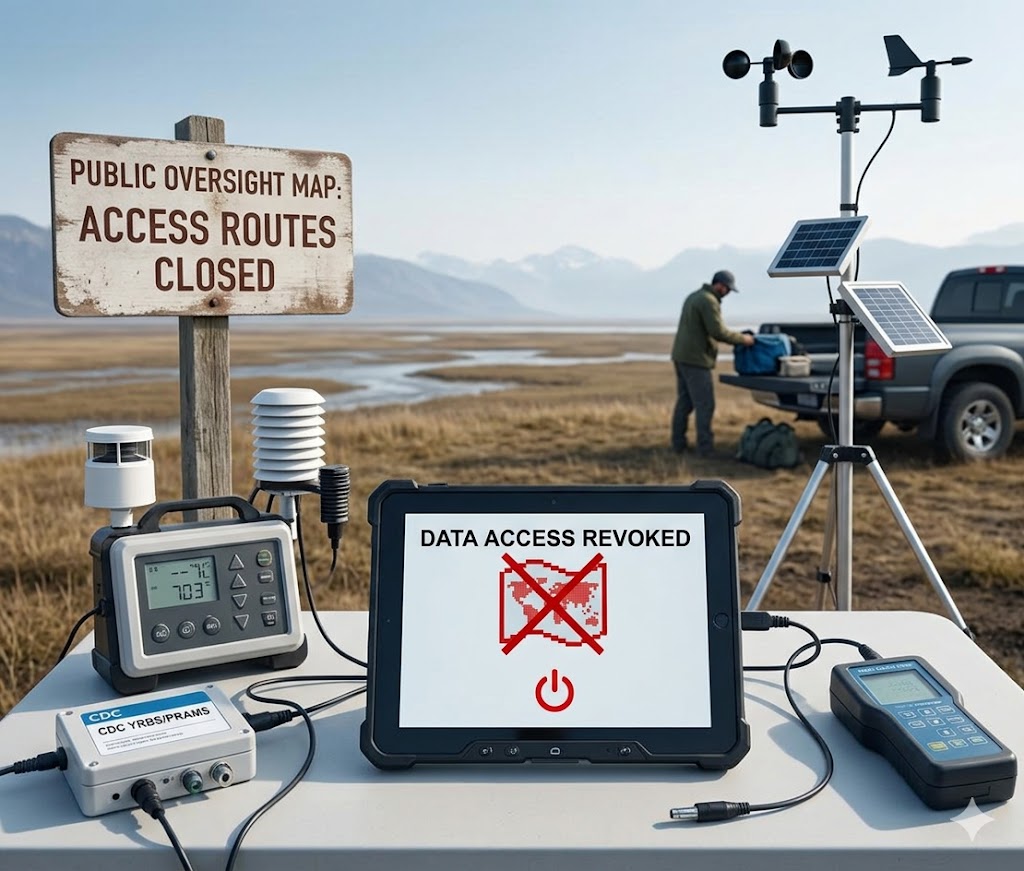
When Public Data Disappears, Oversight Loses Its Map
Public datasets are not just background information. They are part of how people see whether government is doing what it […]
Public datasets are not just background information. They are part of how people see whether government is doing what it […]

Jack Smith’s closed-door testimony did not change the evidence. It marked a constitutional transition: from prosecution to oversight, from adjudication to record-keeping, and from verdicts to memory.

By November 20, the scale and posture of the U.S. maritime strike campaign had crossed a constitutional threshold. This piece examines what that date clarified, why oversight obligations hardened, and what remains undisclosed despite escalation.

Micro-harm now outpaces U.S. oversight. Automation, opacity, and weakened enforcement create systemic harms that laws still forbid but cannot consistently prevent.

A clear briefing on how U.S. government transparency failed in 2025, which legal obligations were undermined, and why the collapse matters for democratic accountability.

Newly released Epstein estate documents reveal that Jeffrey Epstein exchanged real-time texts with a member of Congress during the 2019 Michael Cohen hearing, raising serious concerns about oversight integrity, influence, and the vulnerability of congressional proceedings.

The Department of Defense’s legal duty to report to Congress under the War Powers Resolution is vital to U.S. democracy. In 2025, the DOD missed key reporting deadlines, raising questions about oversight, transparency, and the balance of power.