
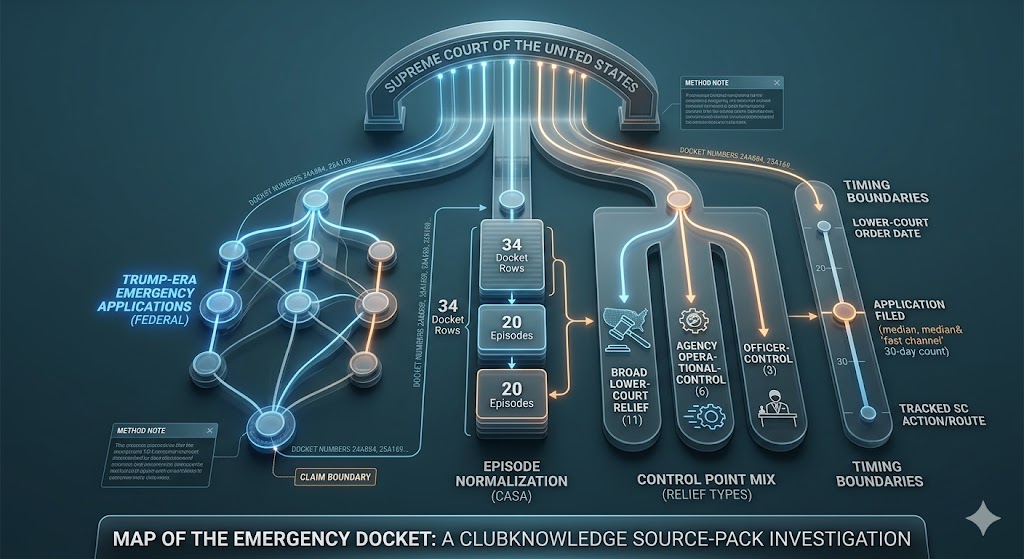
How We Mapped the Supreme Court Emergency Docket
A ClubKnowledge source pack classifies current Trump-era emergency applications by row, episode, relief type, control type, timing, and boundary.
A ClubKnowledge source pack classifies current Trump-era emergency applications by row, episode, relief type, control type, timing, and boundary.
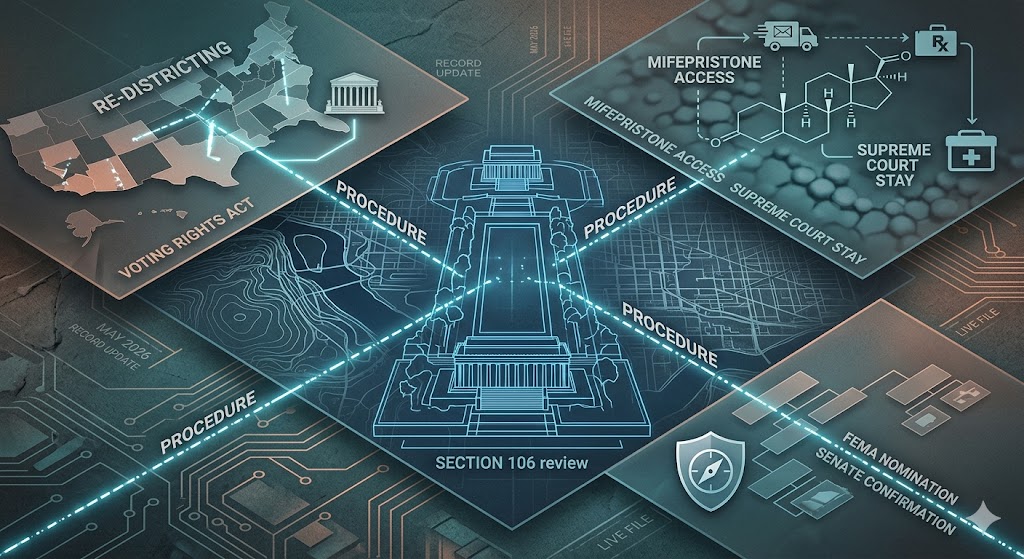
Tuesday’s record is not one story. It is a set of procedural moves affecting redistricting, medication access, disaster leadership, and the National Mall. The common thread is simple: procedure is where public power becomes practical.
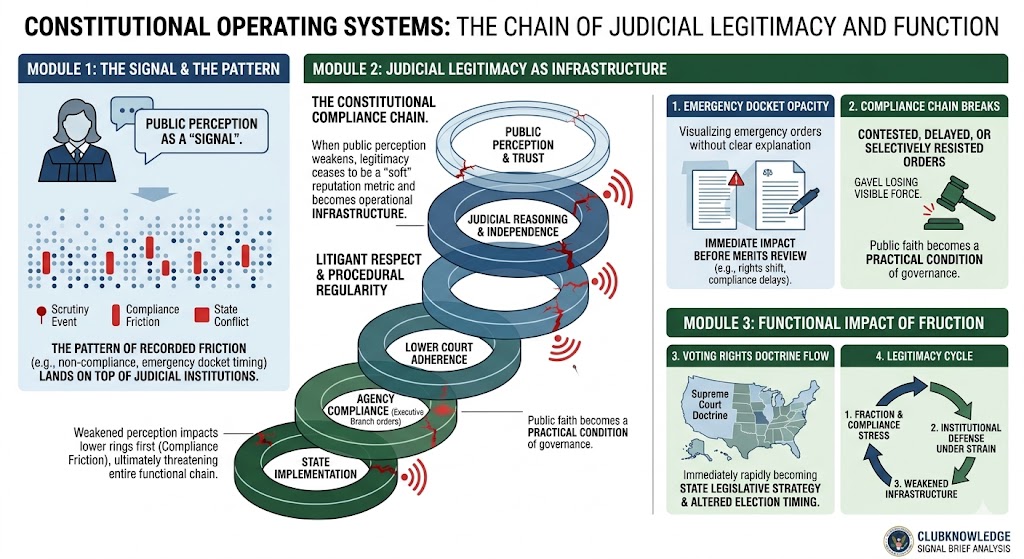
Chief Justice John Roberts says Supreme Court justices should not be treated as political actors. The record does not prove partisan motive. It does show why public confidence, emergency orders, compliance fights, and judicial pressure now belong in the same legal-environment file.

A decade-long expansion of emergency legal tools-from the Supreme Court to the executive branch-has quietly redefined how national policy is

Today’s reporting makes clear that Trump v. Slaughter is part of a much wider shift in how federal power is structured. As regulators face political pressure, budgets shrink, and courts take a more active role, the Supreme Court’s decision will help determine what kind of regulatory system the country has in the years ahead.

For nearly a century, Humphrey’s Executor has been the quiet compromise that let “independent” agencies survive changes in the White House. It gave Congress room to build expert regulators that presidents couldn’t fire at will. As the Court hears Trump v. Slaughter, that 1935 bargain is entering its terminal phase.

A sweeping investigative narrative examining how National Guard deployments, executive centralization, and the Supreme Court’s review of *Trump v. Slaughter* are converging into a profound test of American constitutional structure.