
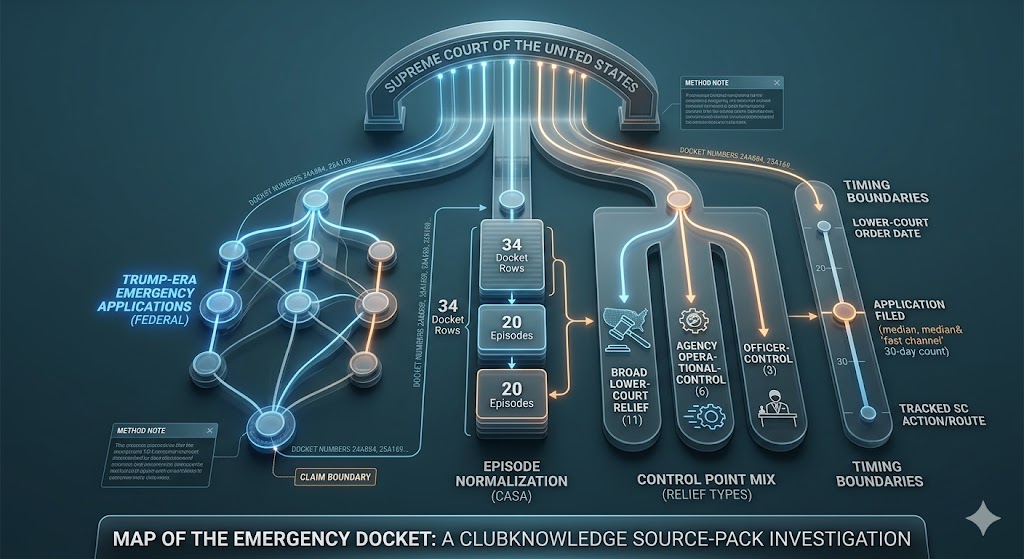
How We Mapped the Supreme Court Emergency Docket
A ClubKnowledge source pack classifies current Trump-era emergency applications by row, episode, relief type, control type, timing, and boundary.
A ClubKnowledge source pack classifies current Trump-era emergency applications by row, episode, relief type, control type, timing, and boundary.
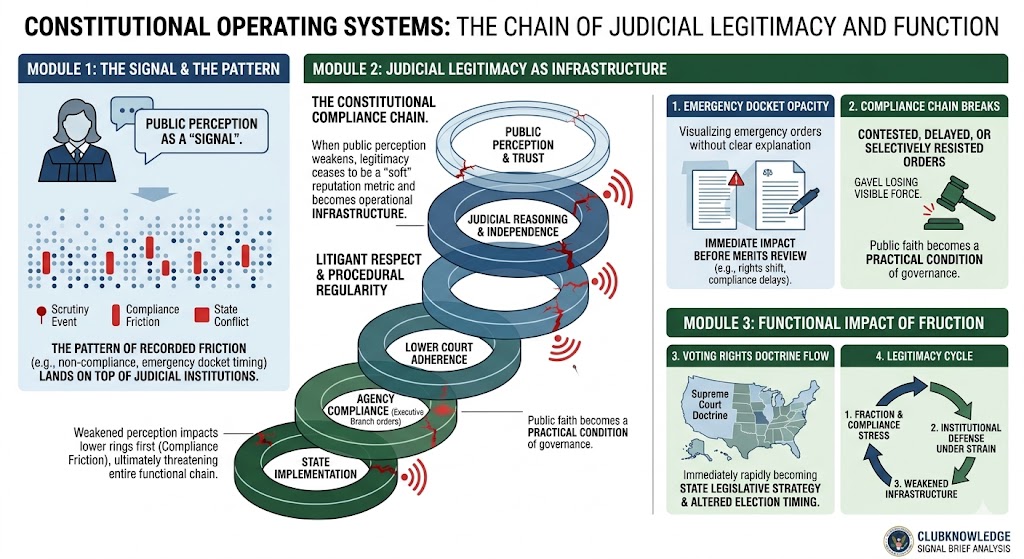
Chief Justice John Roberts says Supreme Court justices should not be treated as political actors. The record does not prove partisan motive. It does show why public confidence, emergency orders, compliance fights, and judicial pressure now belong in the same legal-environment file.

American institutions are increasingly operating within the law while losing public authority. Courts hesitate, agencies retreat from clarity, and Congress struggles to enforce its powers in time to matter. This essay examines how legality, untethered from decisiveness and transparency, is no longer sufficient to sustain legitimacy.

A decade-long expansion of emergency legal tools-from the Supreme Court to the executive branch-has quietly redefined how national policy is

For years, the Supreme Court’s “shadow docket” lived in obscurity – a procedural backwater of last-minute execution stays and minor