
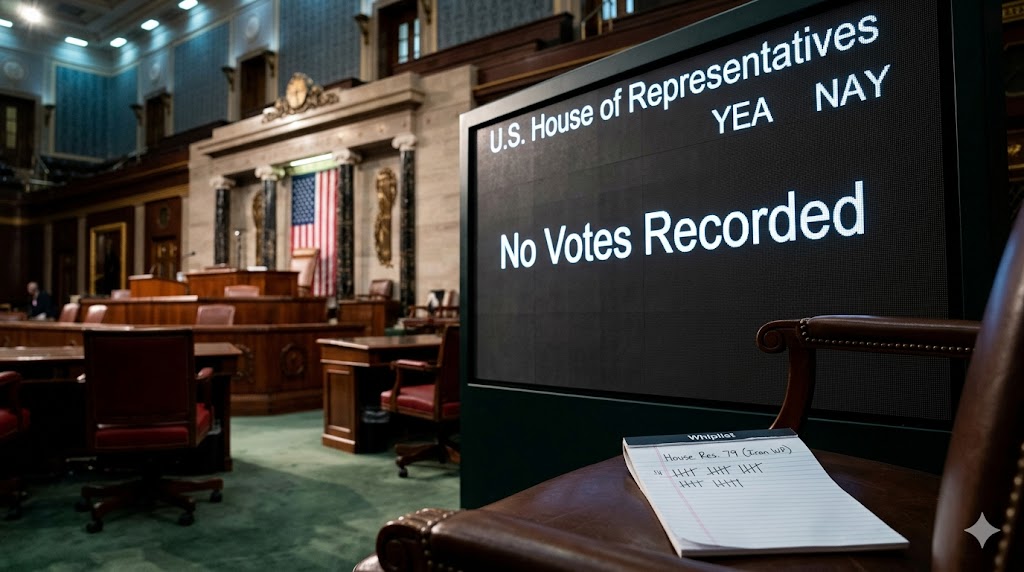
When A War-Powers Vote Disappears, Public Consent Loses A Route
A Friday ClubKnowledge Field Note on Congress, Iran, and the public-record cost when a war-powers vote is pulled before voters can see where representatives stand.
A Friday ClubKnowledge Field Note on Congress, Iran, and the public-record cost when a war-powers vote is pulled before voters can see where representatives stand.

Jack Smith’s closed-door testimony did not change the evidence. It marked a constitutional transition: from prosecution to oversight, from adjudication to record-keeping, and from verdicts to memory.

By November 20, the scale and posture of the U.S. maritime strike campaign had crossed a constitutional threshold. This piece examines what that date clarified, why oversight obligations hardened, and what remains undisclosed despite escalation.

The U.S. seizure of a Venezuelan oil tanker—outside any declared conflict and without UN authorization—signals a growing merger between sanctions enforcement and military action. As Congress seeks answers, the episode raises a larger question: do maritime law and democratic oversight still meaningfully restrain the executive?

The Department of Defense’s legal duty to report to Congress under the War Powers Resolution is vital to U.S. democracy. In 2025, the DOD missed key reporting deadlines, raising questions about oversight, transparency, and the balance of power.